Loading...
Keeping investors compliant with bookkeeping
Problem statement · As a landlord, I need to keep track of and manage my income and expenses, understand my tax obligations, and submit my self-assessment online according to HMRC's Making Tax Digital rules.
Role · Lead Product Designer
How we worked · We validated the market and user needs quickly, then used Figma Make to get a testable prototype for transaction management and quarterly submissions in days and put it in front of users for feedback. The design system in Figma and shared components in code kept delivery fast and consistent across squads.
Product principles
Show the right thing, not everything
Help users focus by surfacing what matters most in the moment. Prioritise clarity over completeness — not everything needs to be shown.
Build confidence with every interaction
Make it easy to understand, hard to get lost, and reassuring to use. Guide naturally, place support where it's needed, and use data-led insights where possible to build trust and confidence.
Make it useful every time, not just the first time
Create features that are clear, intuitive, and valuable every time they're used. If it needs constant explanation, it's not intuitive enough.
Problem context
What we already knew, and what we validated quickly
The introduction of Making Tax Digital represented a huge business opportunity for us to acquire new landlords through a free solution, whilst also solving user needs we'd already identified through the holistic bookkeeping solution.
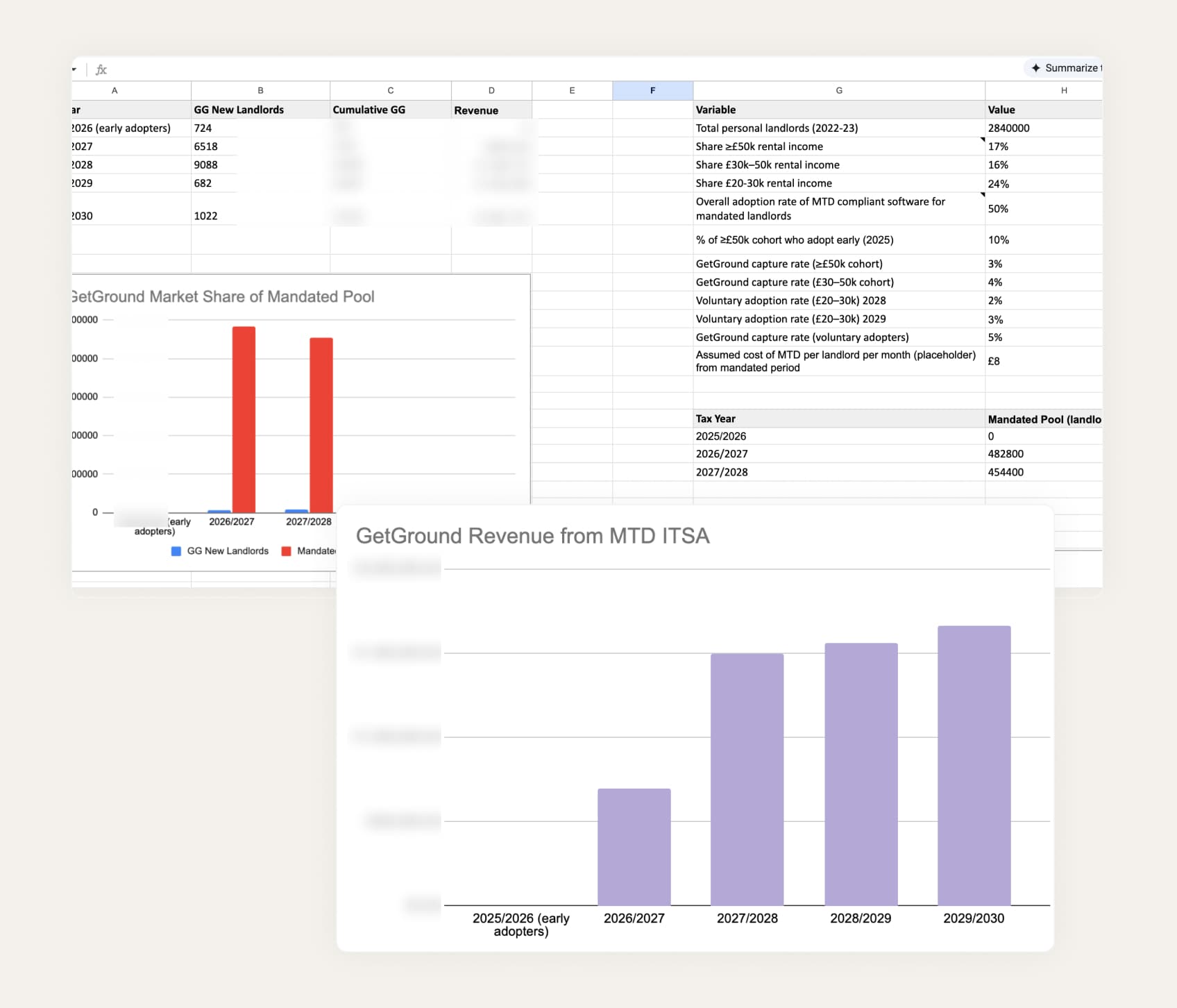
To maximise the impact of this project, we needed to understand the market size and user sentiment. We built a model to understand how many users we could capture (conservatively and aggressively) and the resulting revenue. Using real market data helped us present a strong value proposition to business leaders.
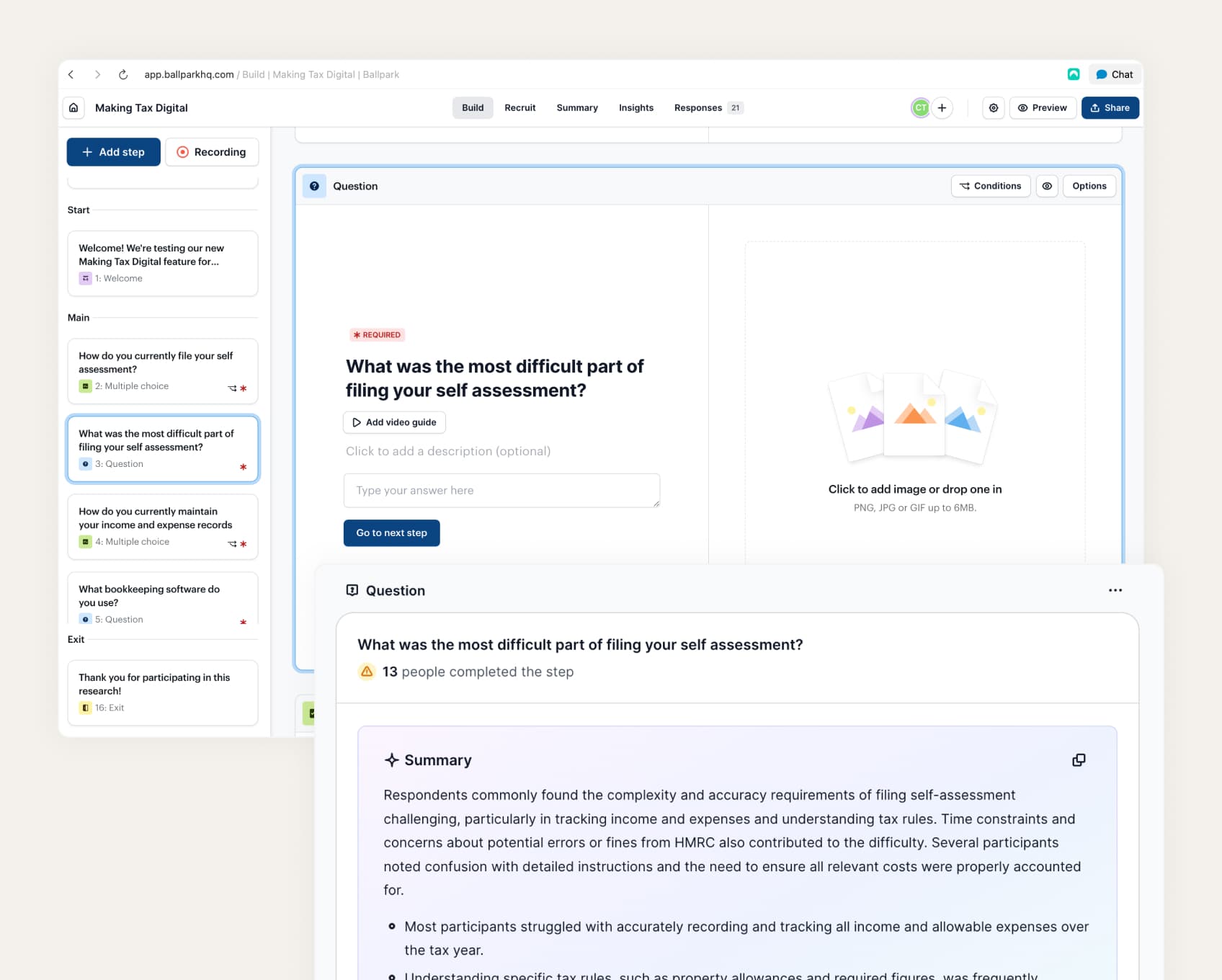
80% of landlords still rely on spreadsheets (not compatible with MTD)
Landlords want clarity without complexity when making tax submissions. Common pain points centred around lack of correct figures, which figures to use, and how to find them.
60% of users handle their own self assessments
The majority of landlords prefer to manage much of their bookkeeping and tax themselves, rather than appoint an accountant.
35% said they were not aware of Making Tax Digital
MTD is not on every landlord's radar, and not well understood; of those who were familiar, there was mixed understanding of what was required from them.
What does this mean for the platform?
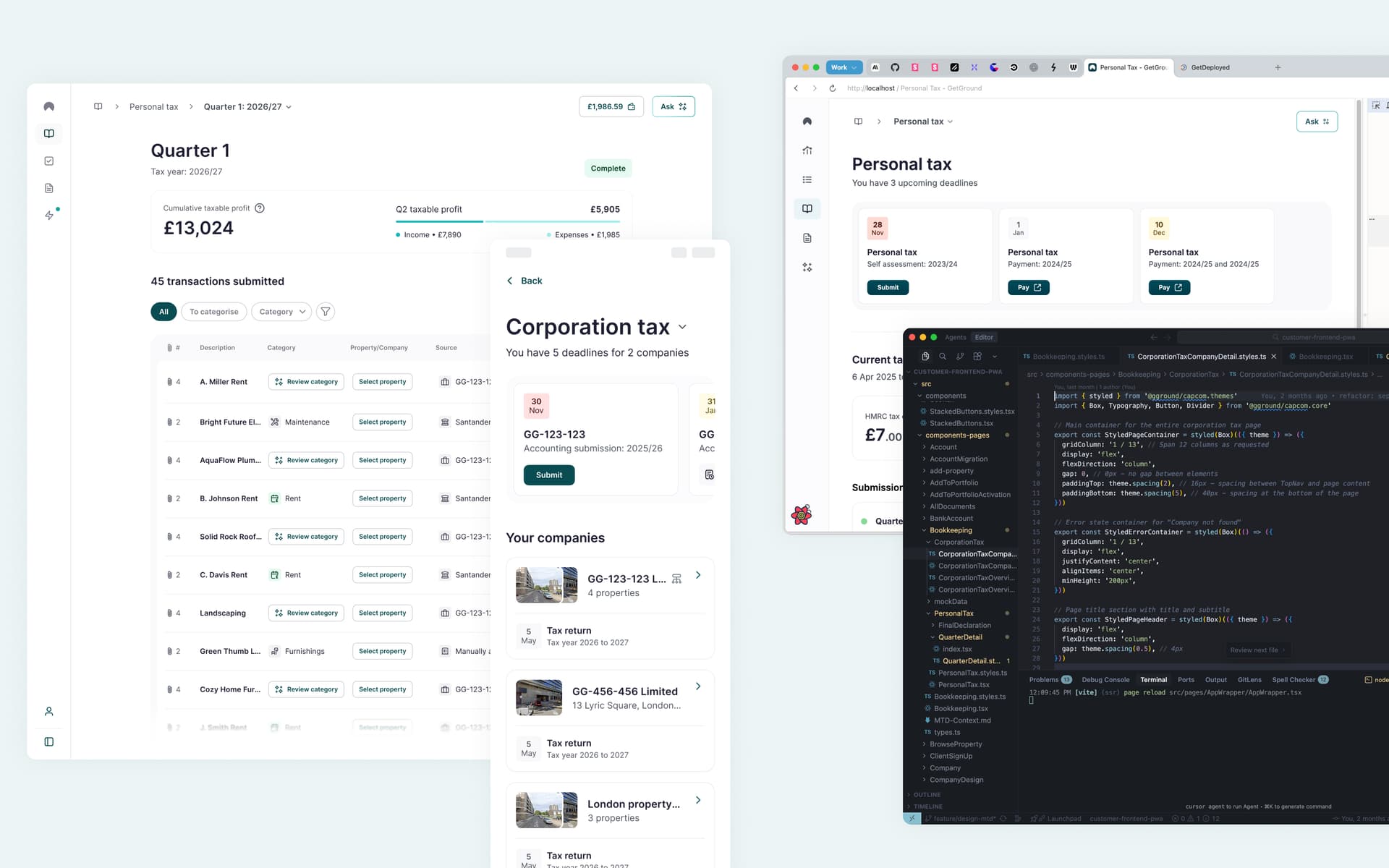
Bookkeeping: a comprehensive transaction, tax deadline, and submission management tool
The current transactions list was too basic to provide real value. Users need to see their property income and expenses from all sources, manage these transactions efficiently, and submit their tax obligations.
Complying with HMRC rules and integrating with APIs
To build an effective Making Tax Digital solution, we needed a solid understanding of HMRC's requirements to enable complete and compliant tax submissions via their MTD APIs.
Problem to prototype
Rapid AI-enabled prototyping and user testing
I used Figma Make to spin up a testable prototype for transaction management and quarterly submissions in a couple of days, which we then put in front of users for feedback. Building this way cut design and testing time by half, gave us a more comprehensive test, and let me spot journey gaps faster than traditional user flow mapping or working through each scenario in isolation.
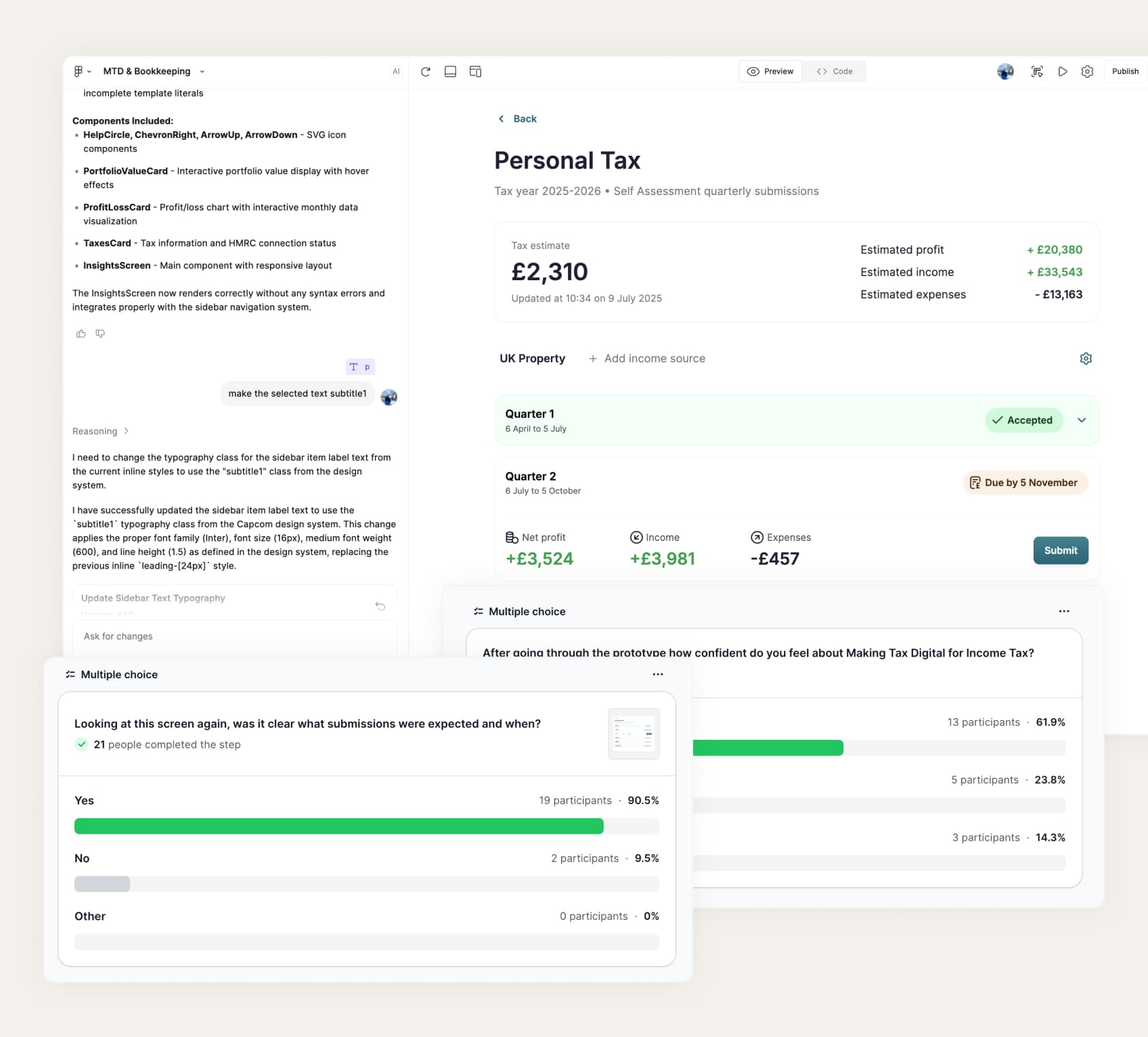
40% confidence uplift
Before using the prototype only 20% of participants said they were confident with MTD changes; after, 60% said they were confident with the MTD changes, a jump of 40%.
90% clarity
90% of participants said it was clear what needed to be submitted and when while looking at the Personal Tax screen.
Feasibility mapping
Mapping the prototype to technical requirements
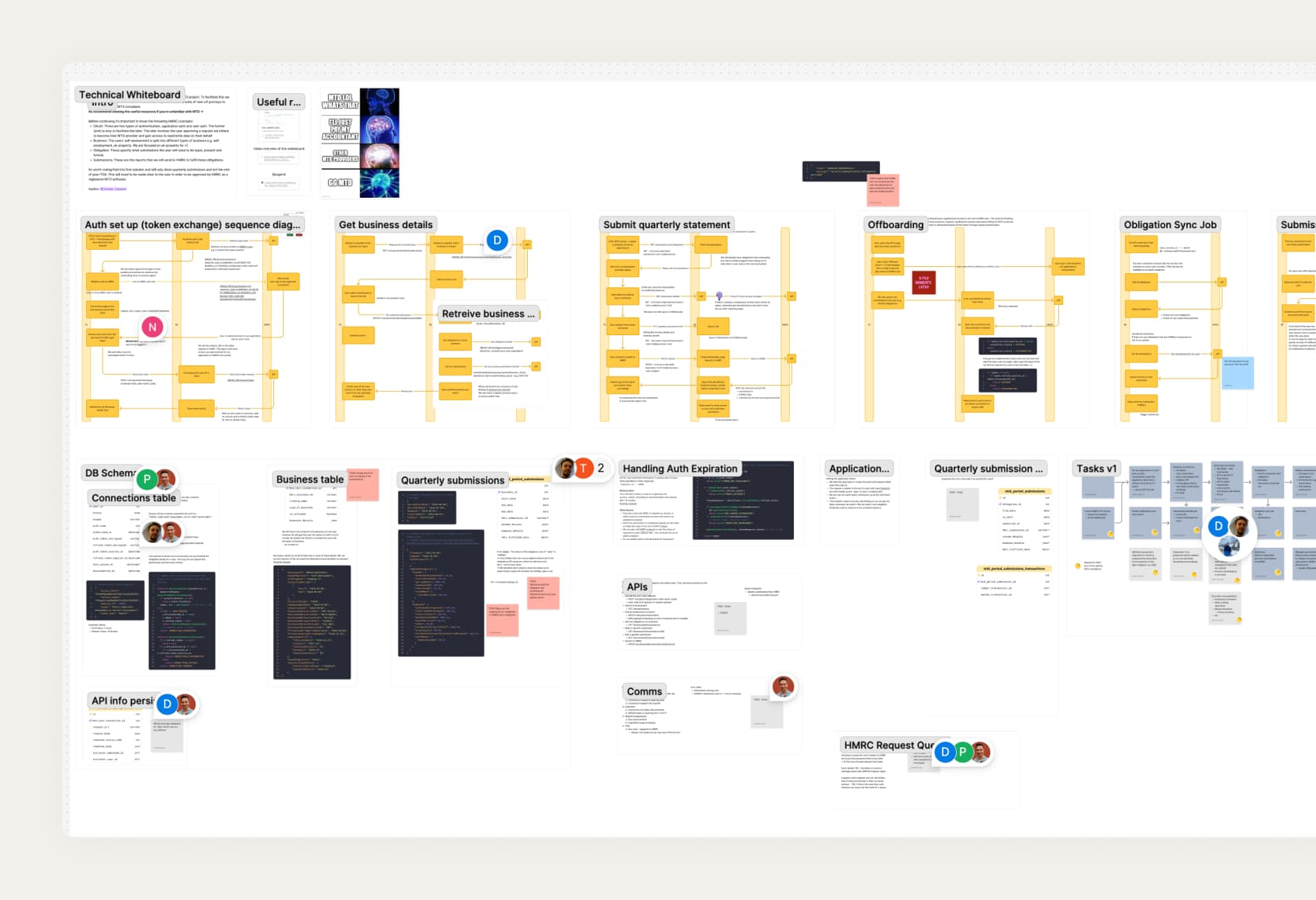
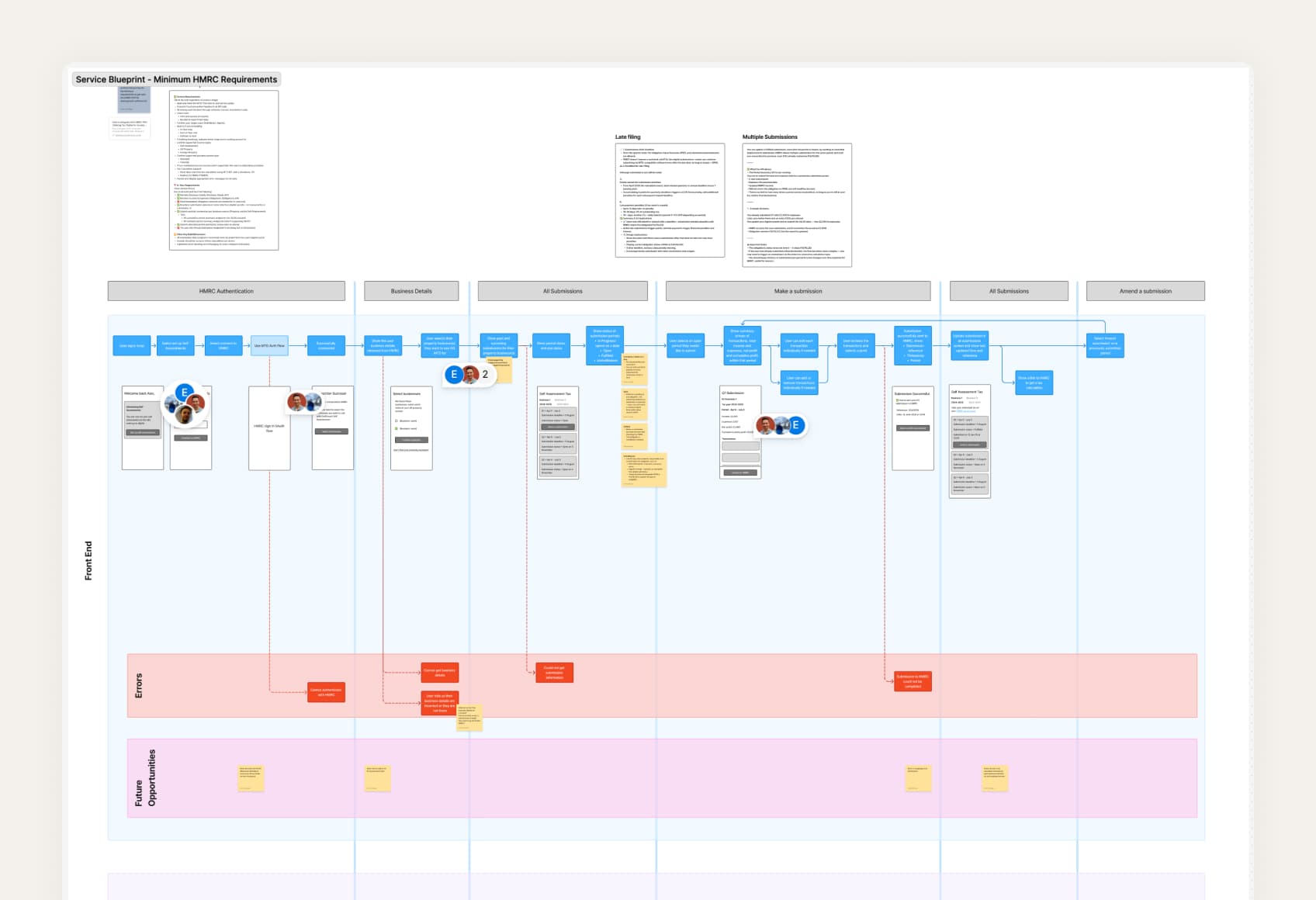
As a full product team, engineering included, we mapped an iteration of the prototype against HMRC requirements, APIs, and our platform constraints. The whiteboard and blueprint sessions made it obvious where the flow was feasible, where engineering needed spikes, and where the experience had to flex to stay compliant.
Design system
Enabling fast and consistent delivery
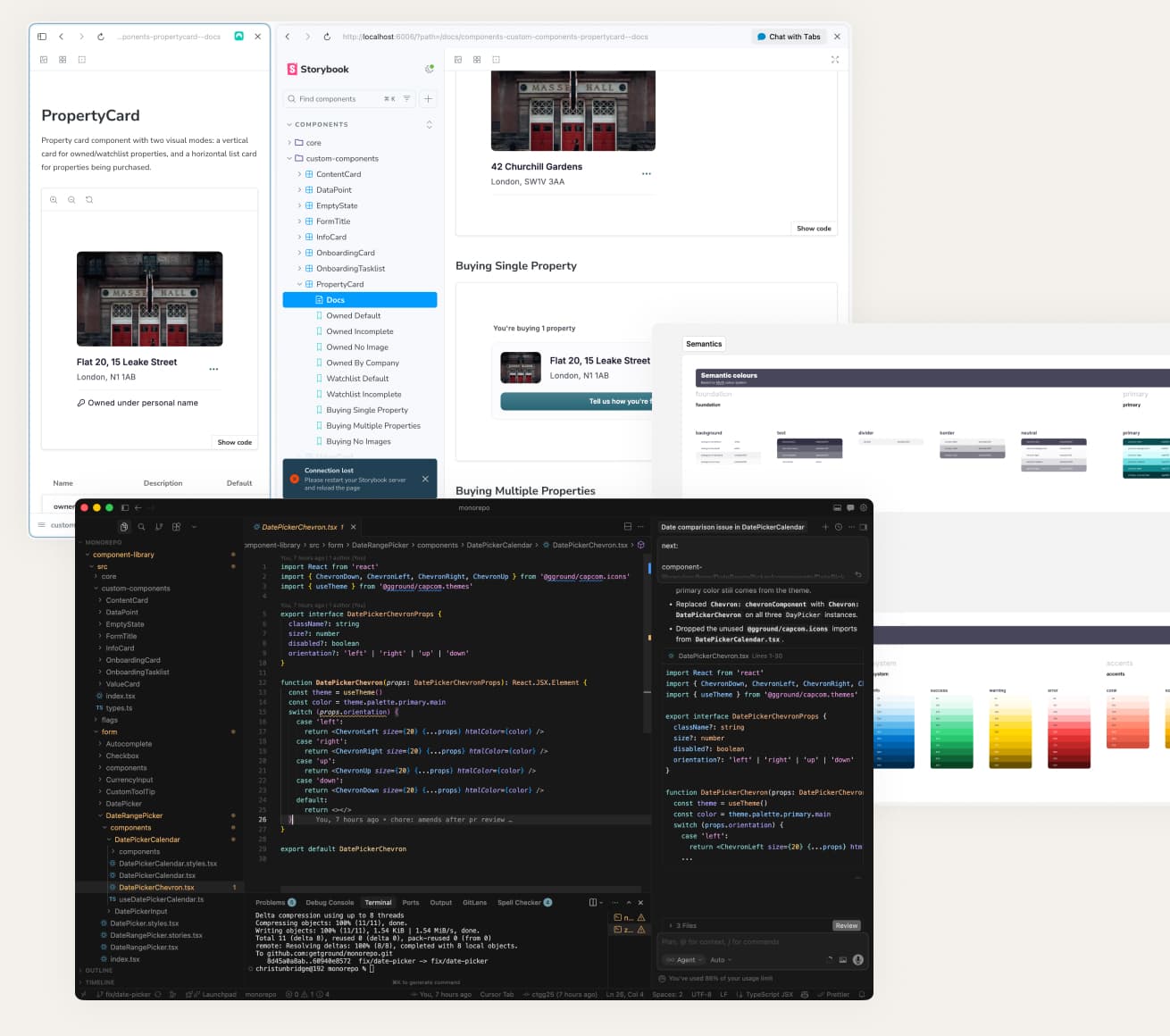
I built and maintain our design system both in Figma and our component library within the monorepo. This enables new screens to reuse tokens and patterns instead of one-off layouts, allowing engineers to ship faster, and myself to build directly in the codebase without waiting for design handoffs.
Code-first delivery
Next.js and Tailwind, directly in our codebase
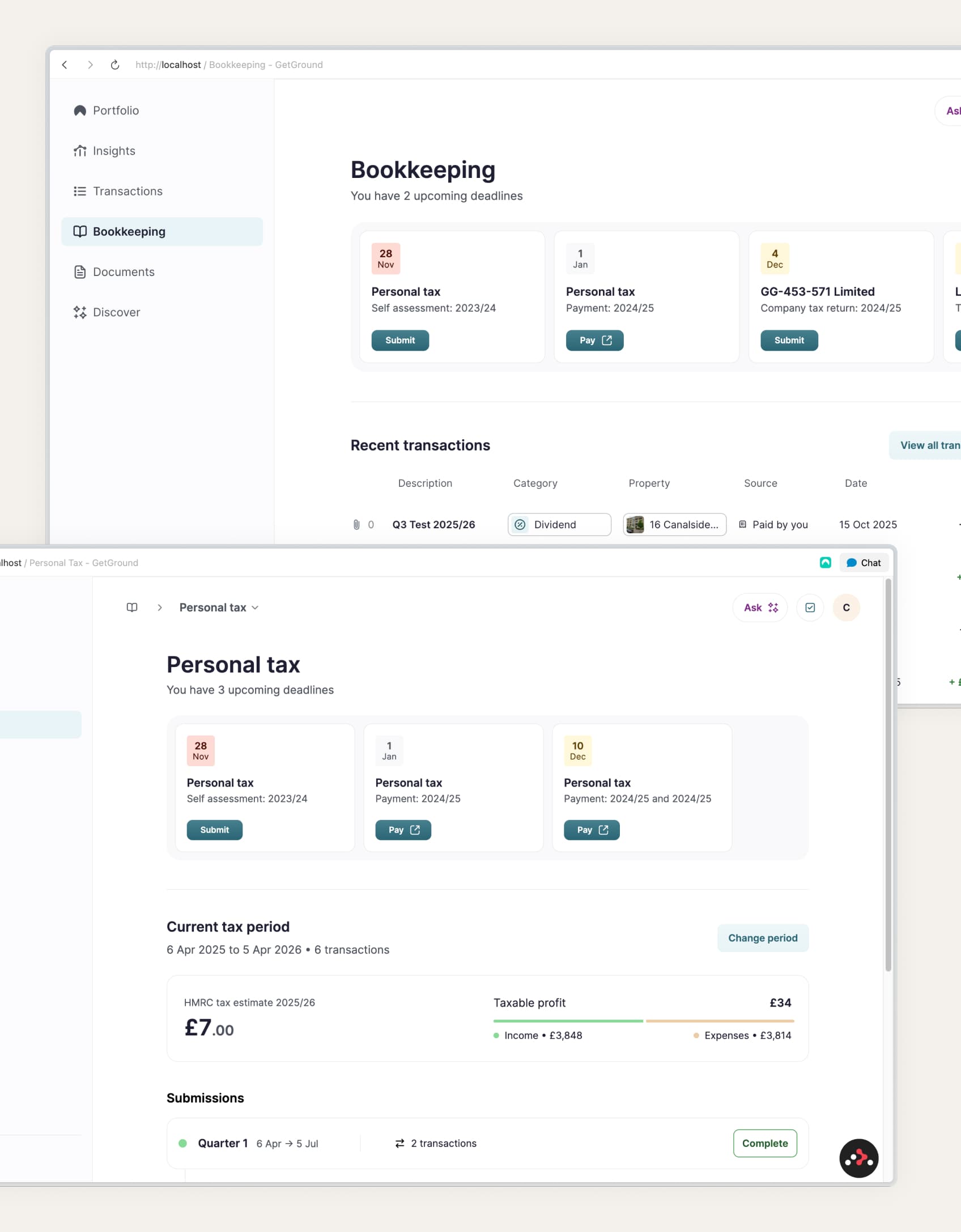
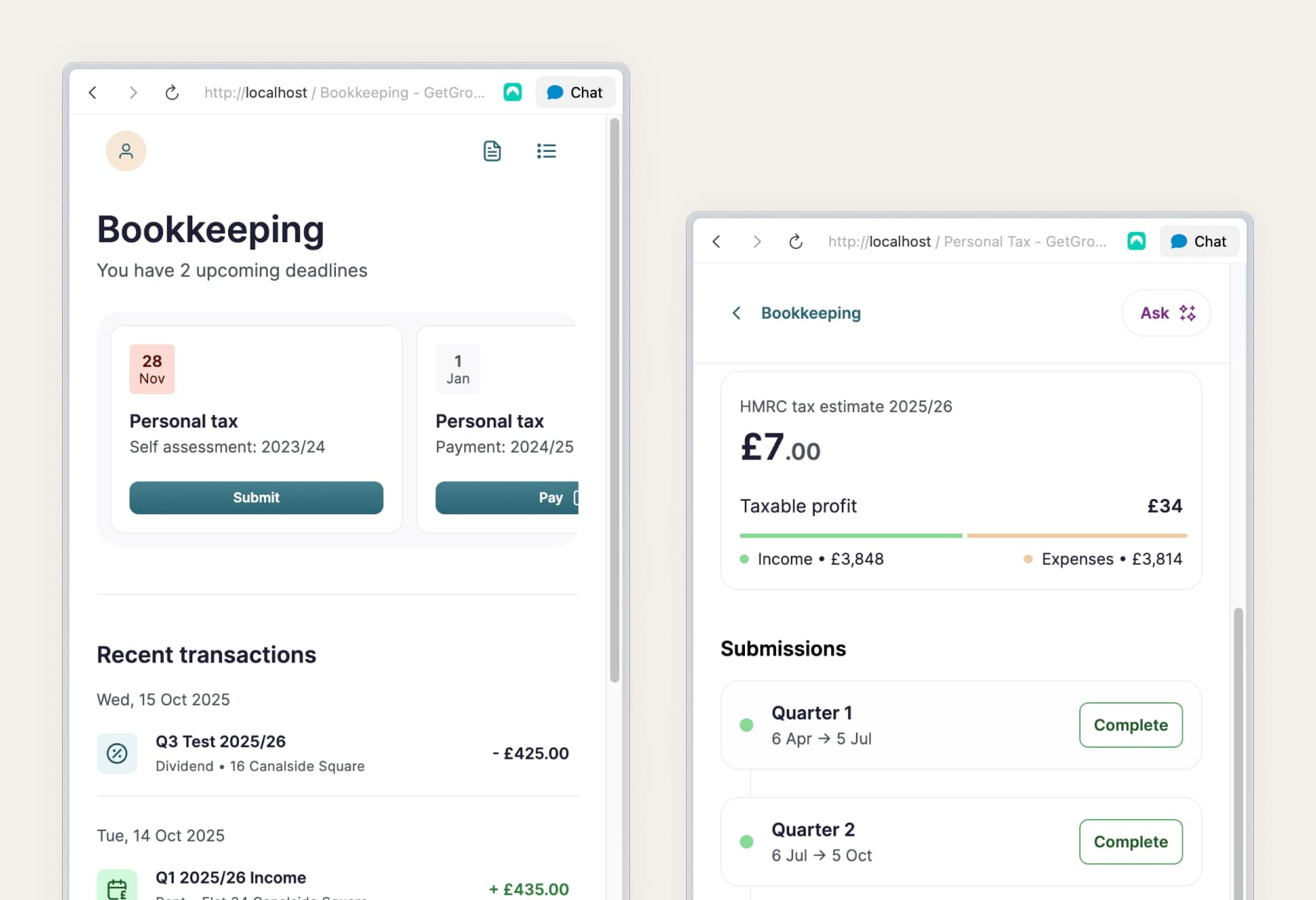
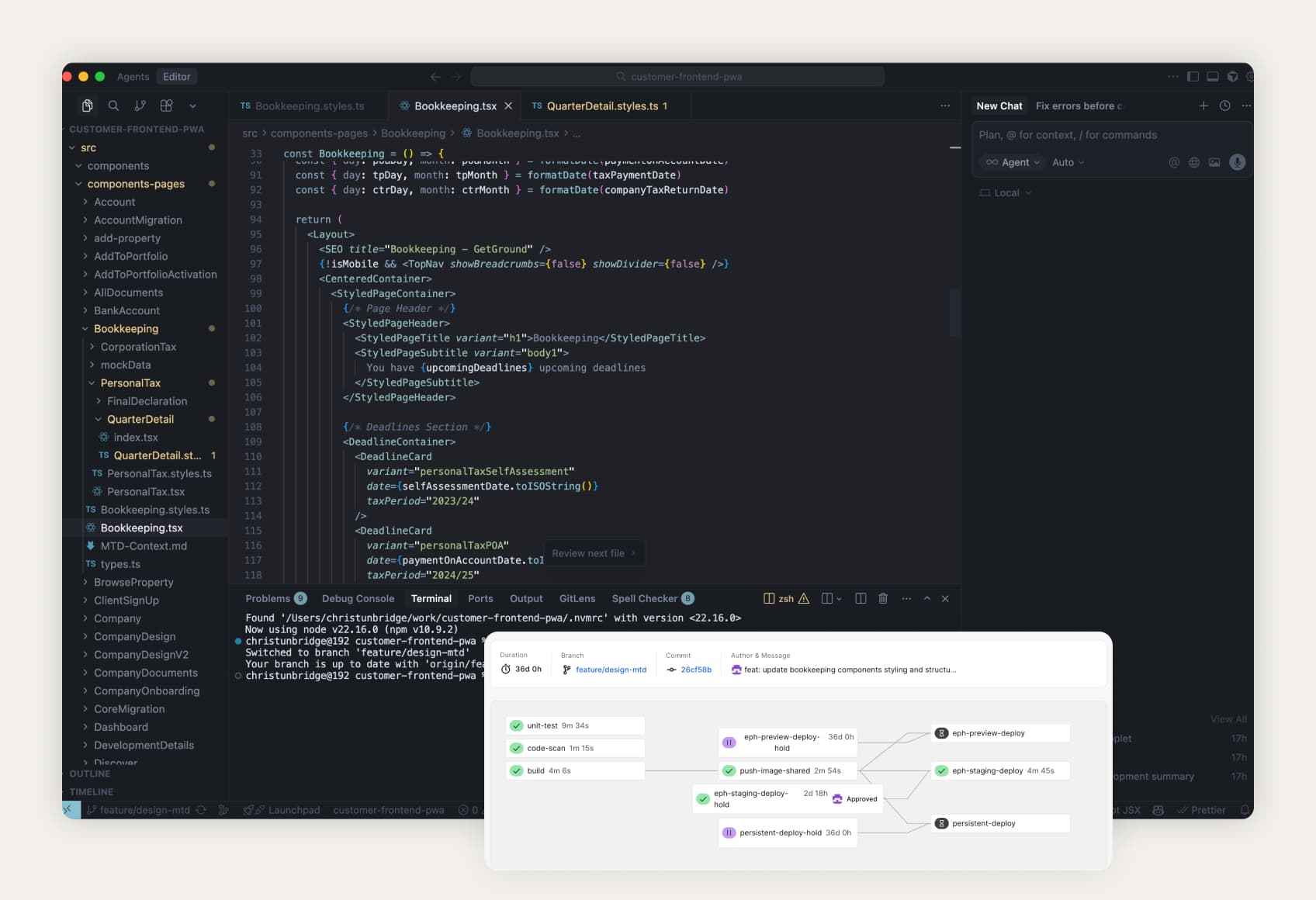
Using Cursor, I built the core Bookkeeping and MTD front-end in our codebase, creating and using existing components to keep design consistency with the rest of the platform. This approach let me go beyond static frames, use real data and staging accounts to validate decisions, save engineering time, and raise the quality of what we shipped.
Specs and coverage
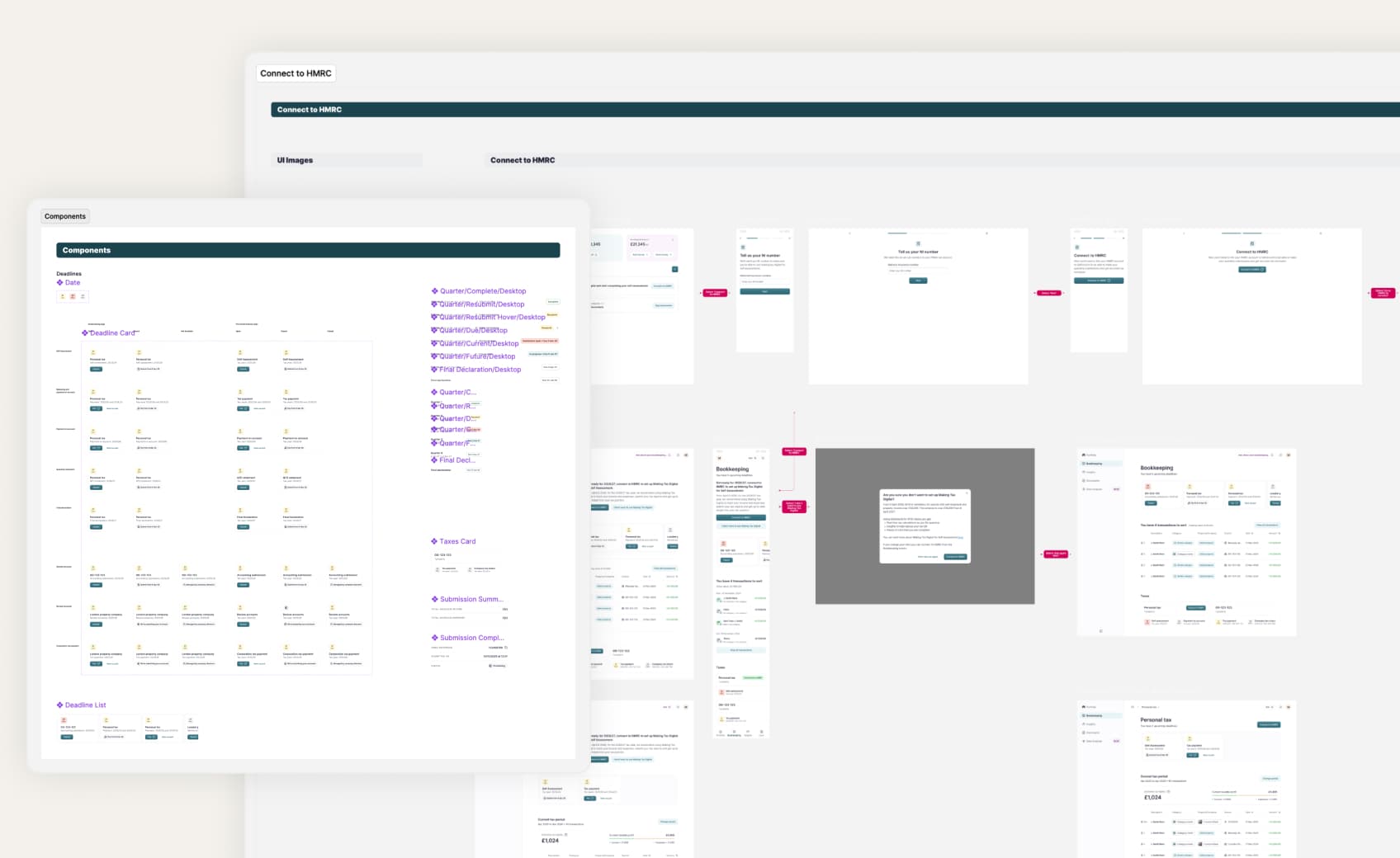
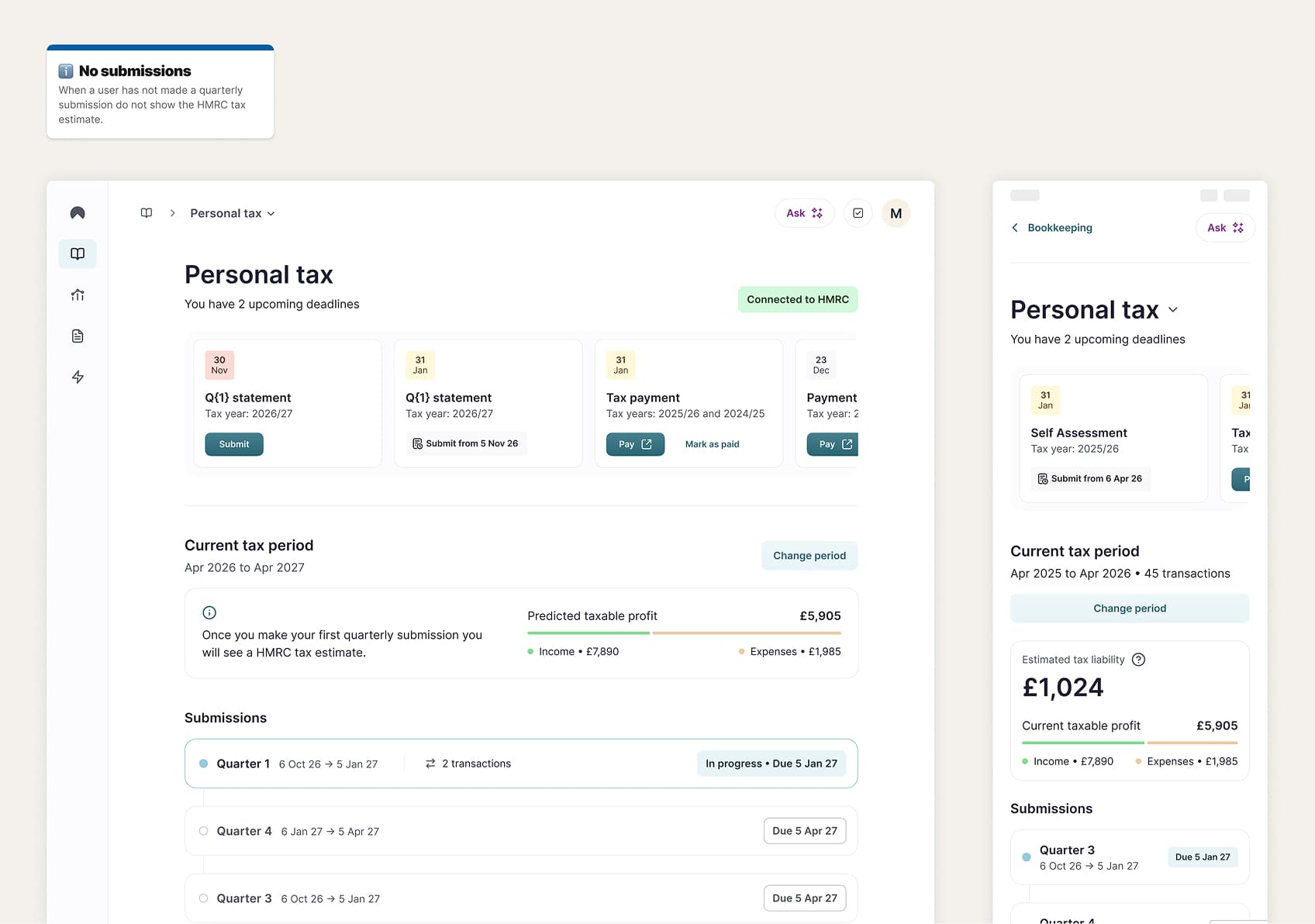
Instead of a comprehensive set of designs, as would have been the case with a traditional design handoff, I delivered targeted Figma designs only where they added value, focusing on component variants and key scenarios, while using the front-end implementation itself to define the majority of flows.
Impact
New user sign-ups increased by 56%
We saw a large increase in sign-ups by personal landlords and users adding personal properties, driven in part by the free MTD solution.
564 active open banking connections
Since releasing open banking we've had a steady increase in connections. We're seeing more adoption from new users than our older cohort.
60,000+ transactions added since release
With open banking providing automated income and expense tracking, the number of transactions per user per month has increased by 27%.
Next steps
A personal accounting agent
Combined with open banking, transaction management, and insight improvements, we are positioned to bring smarter, AI-enhanced experiences into Bookkeeping. Usage data already points to demand for deeper, more personal help inside the product.
Exploring automated improvements
We are currently looking at how agents and subagents can speed up research and component creation, and whether AI systems can monitor usage in the background, suggest improvements, and open pull requests automatically when changes are safe.
MTD April 2026
The first cohort of landlords who must use MTD starts in April 2026 (income over £50k). The design and engineering work we have done so far means we are now recognised as an MTD developer by HMRC; the next step is to put our MTD solution into the hands of our users.