Loading...
Accounting for sole traders
Helping self-employed individuals run their business, track income and expenses, get paid by their customers faster, and submit their self-assessment.
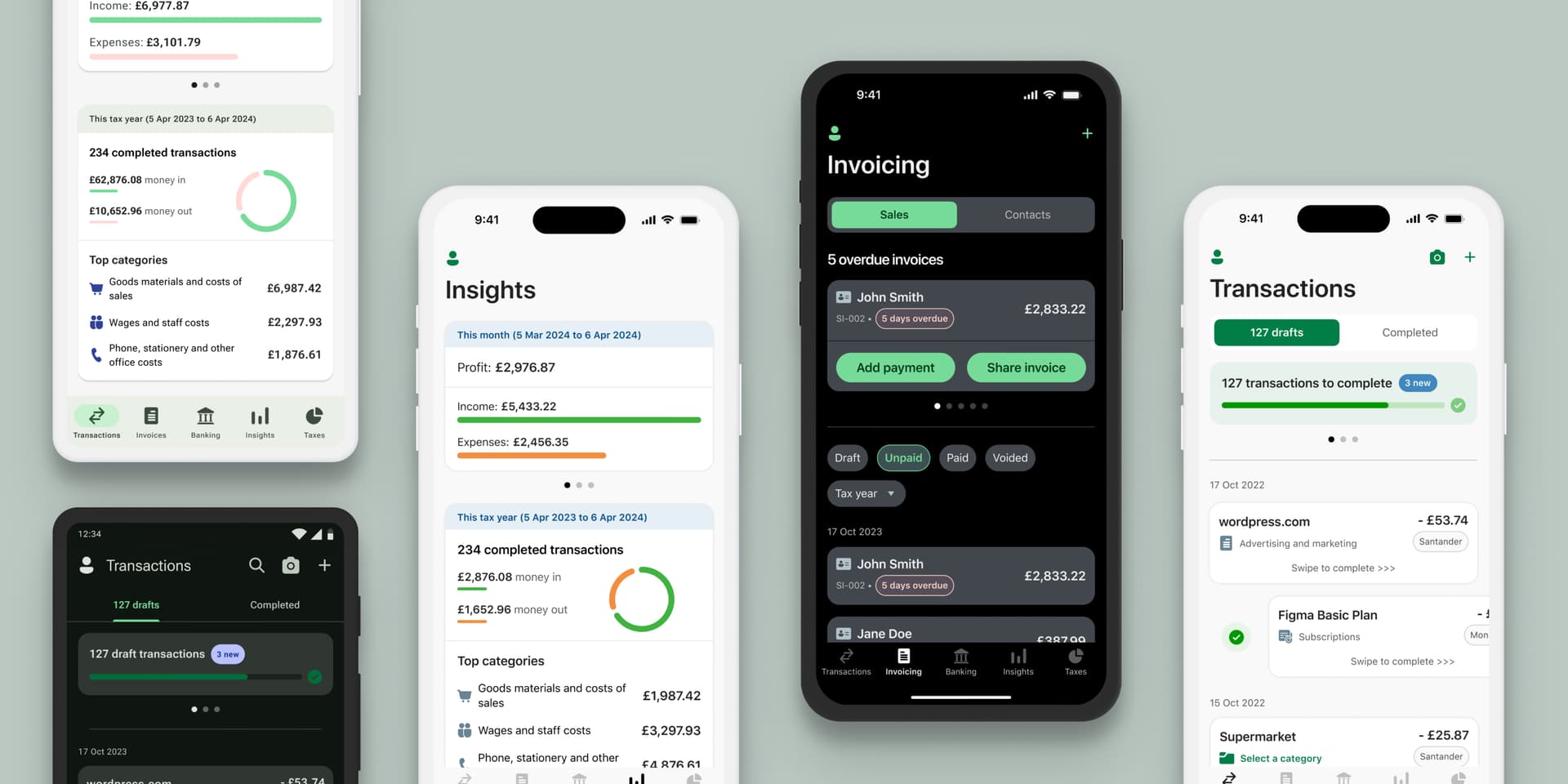
Splitting transactions
Problem Statement · Helping small businesses manage both business and personal finances from a single account while keeping them separate for accounting and tax purposes.
Role · Senior Product Designer
Product principles
Let simplicity build confidence and understanding
Sage Individual is designed for users without an accountant. The app needs to be simple to understand and use, making accounting accessible for those unfamiliar with financial terminology and principles. By reducing complexity we help users feel in control and confident in their decisions.
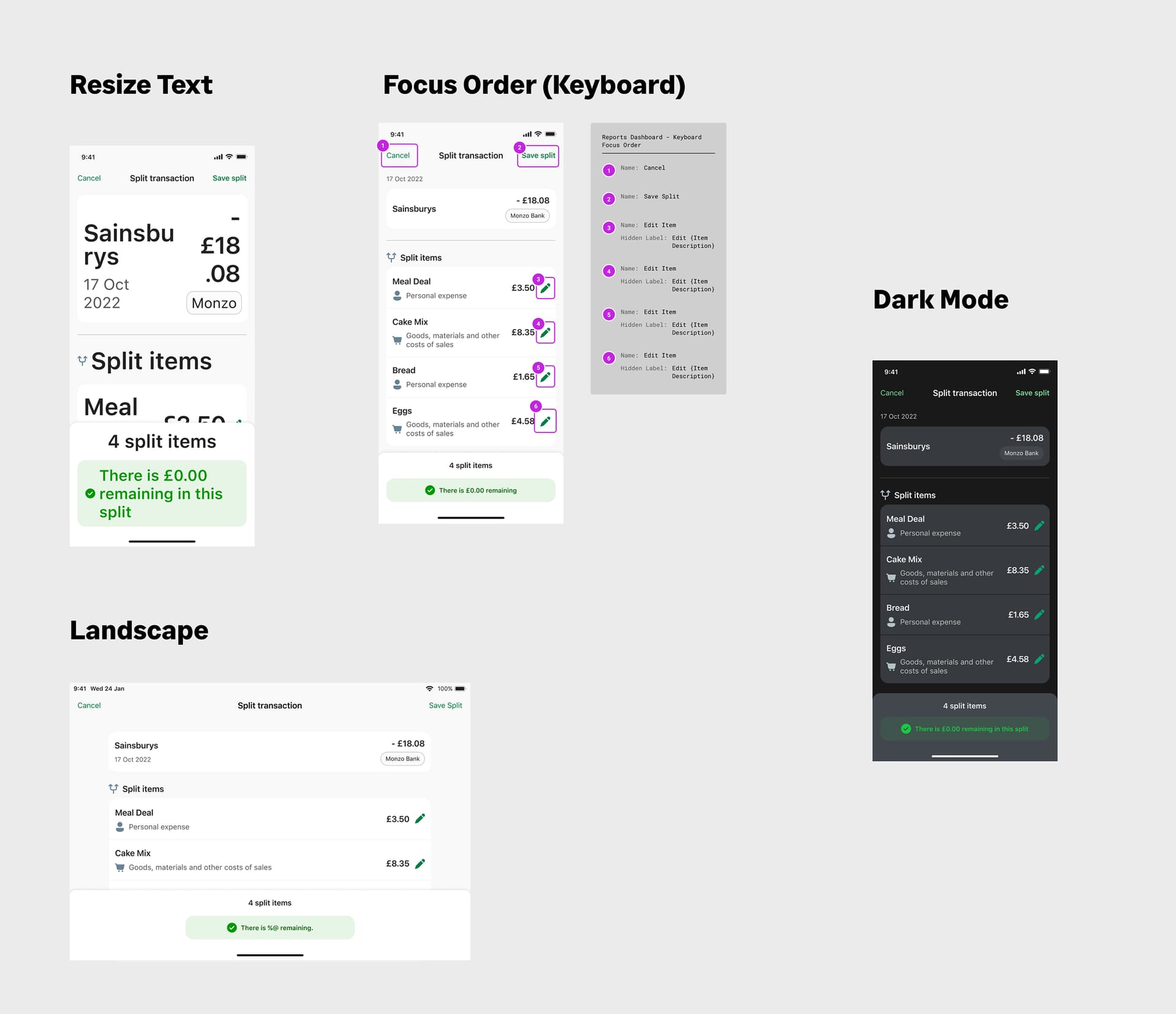
Accessibility is mandatory
Building for accessibility improves the experience for all users, not just those with specific needs. Good accessibility is good design — it ensures everyone can use the app effectively regardless of ability, device, or context.
Improvement is iterative, start small and build
To avoid over-complication and feature bloat, we build iteratively. Start by solving core user needs first, then iterate based on research and feedback. This approach keeps the app focused and ensures each feature genuinely adds value.
Empathise
Value proposition
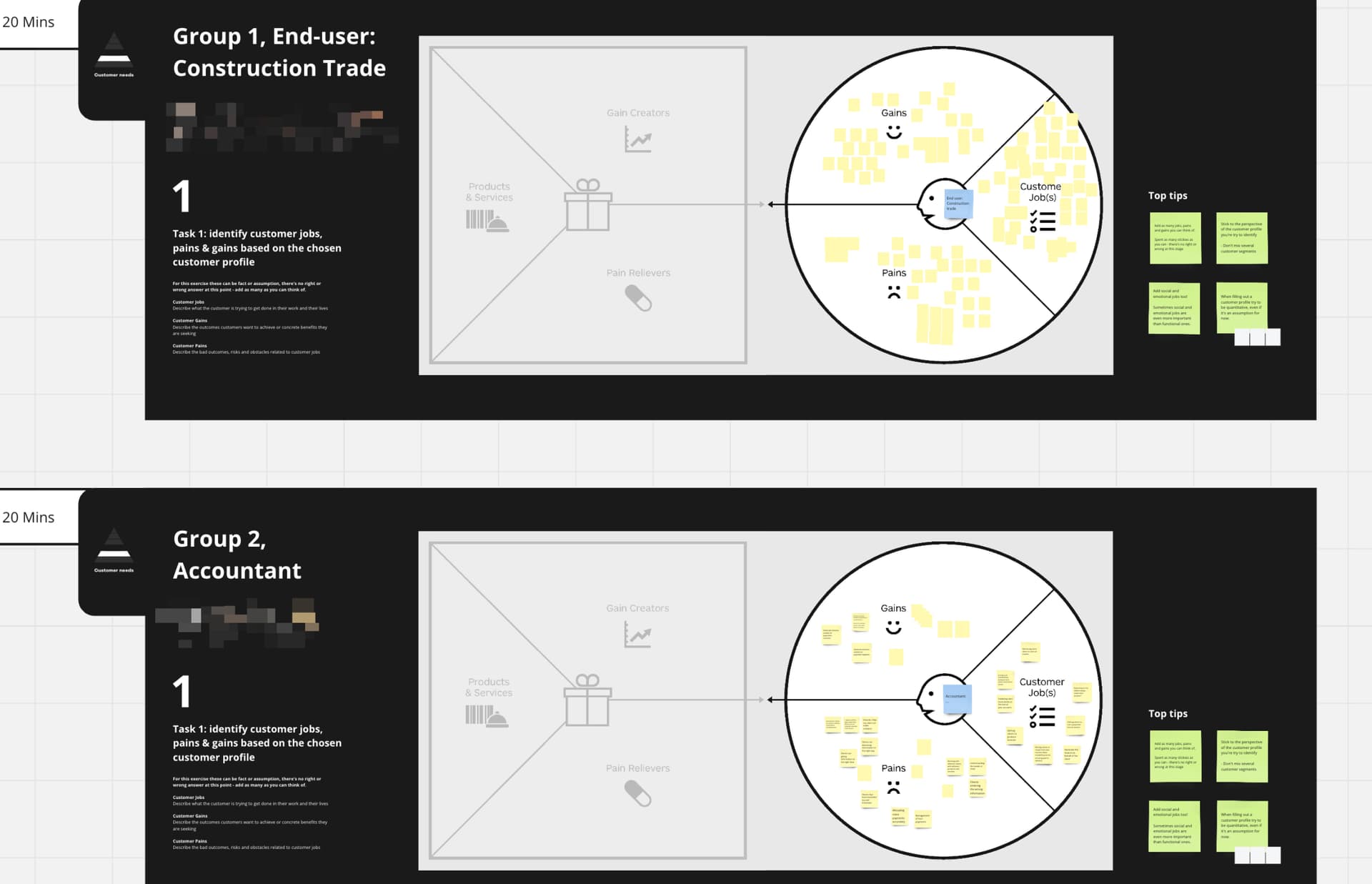
I led value proposition workshops with key stakeholders to define and validate the opportunity for transaction splitting. These workshops brought together product managers, engineers, and business leaders to align on the problem space, user needs, and the value this feature would deliver to sole traders managing mixed business and personal transactions.
User research results
78% of sole traders use a single account
Most sole traders manage both business and personal finances from one bank account, making it difficult to separate spending for tax and accounting purposes.
63% rely on manual workarounds
Sole traders commonly use spreadsheets, separate bank accounts, or memory to track which transactions are business vs personal; all time-consuming approaches.
Clear appetite for in-app solution
Research showed strong demand for an integrated solution that would save time and reduce the complexity of managing mixed transactions.
Business needs
Increase product stickiness & engagement
By solving a core pain point for sole traders, we could increase regular usage of the app and create more value, leading to higher retention.
Competitive differentiation
This feature would differentiate Sage Individual from traditional business banking and accounting solutions, providing a unique selling point in the market.
Foundation for future features
Transaction splitting would create the foundation for more advanced features like tax estimates, expense categorisation, and reporting.
Ideation
Design sprint
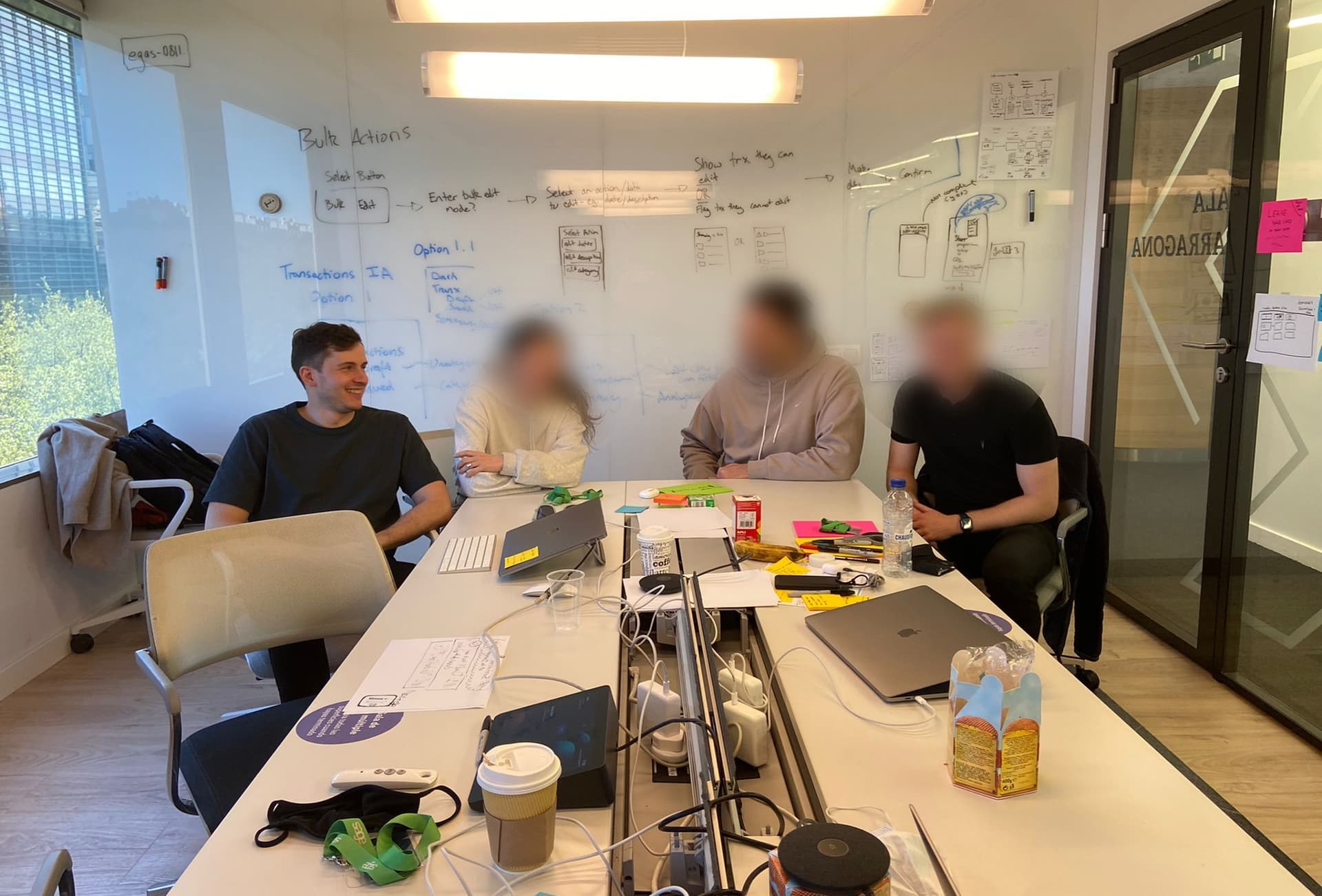
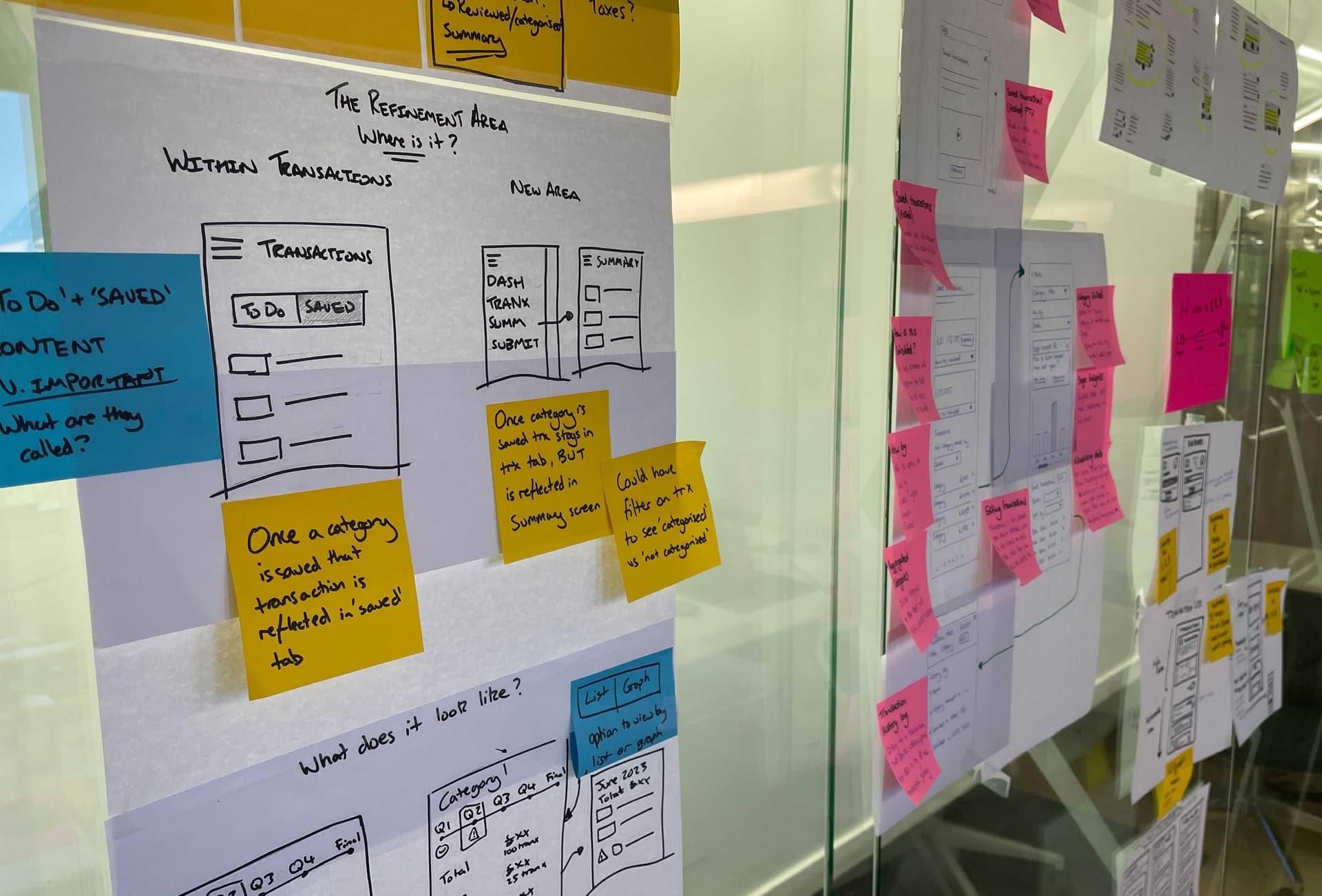
We ran a design sprint to rapidly explore different approaches to transaction splitting. The sprint brought together designers, product managers, and engineers to sketch, prototype, and test ideas with users in just a few days.
This fast-paced, collaborative approach allowed us to quickly validate our direction and identify the most promising interaction patterns before investing in detailed design and development.
Design, test & deliver
User journey mapping
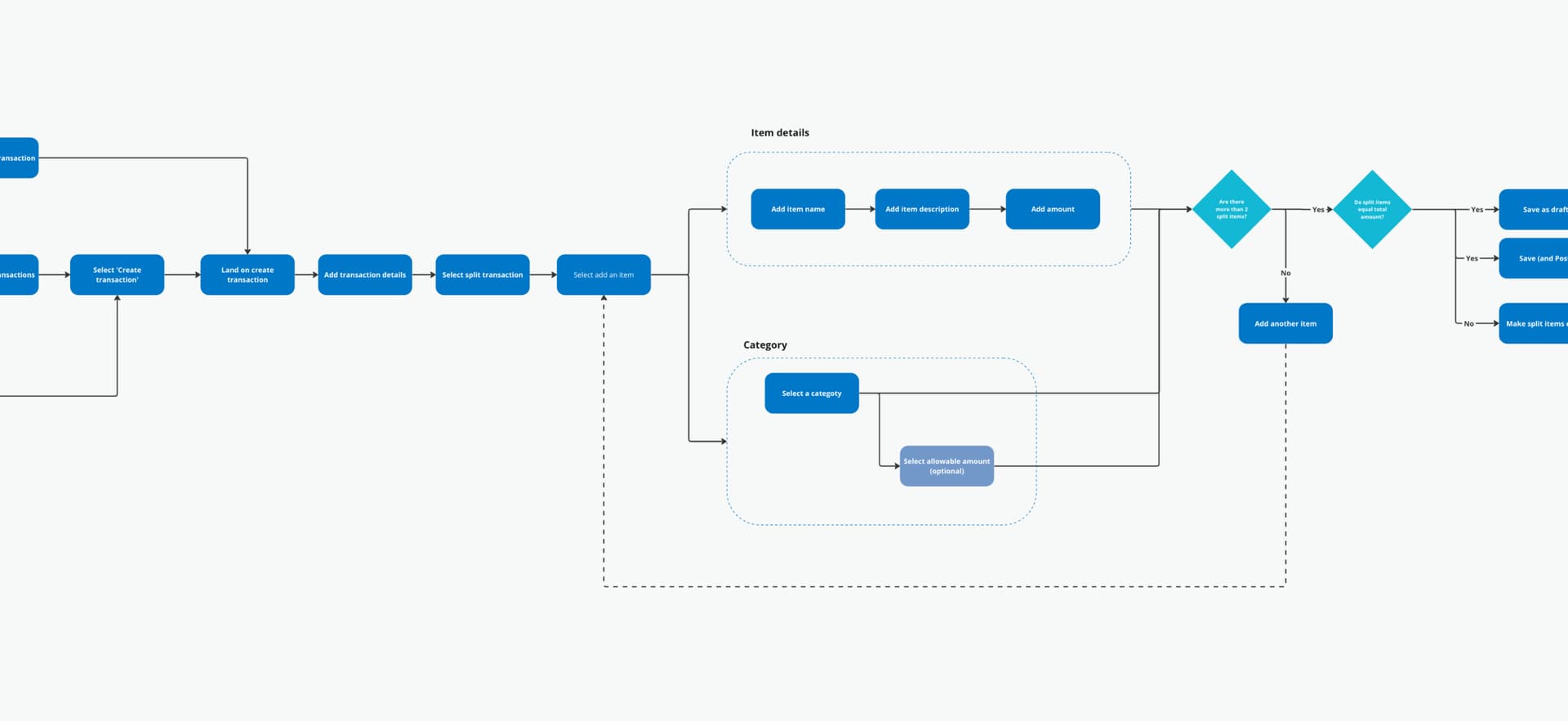
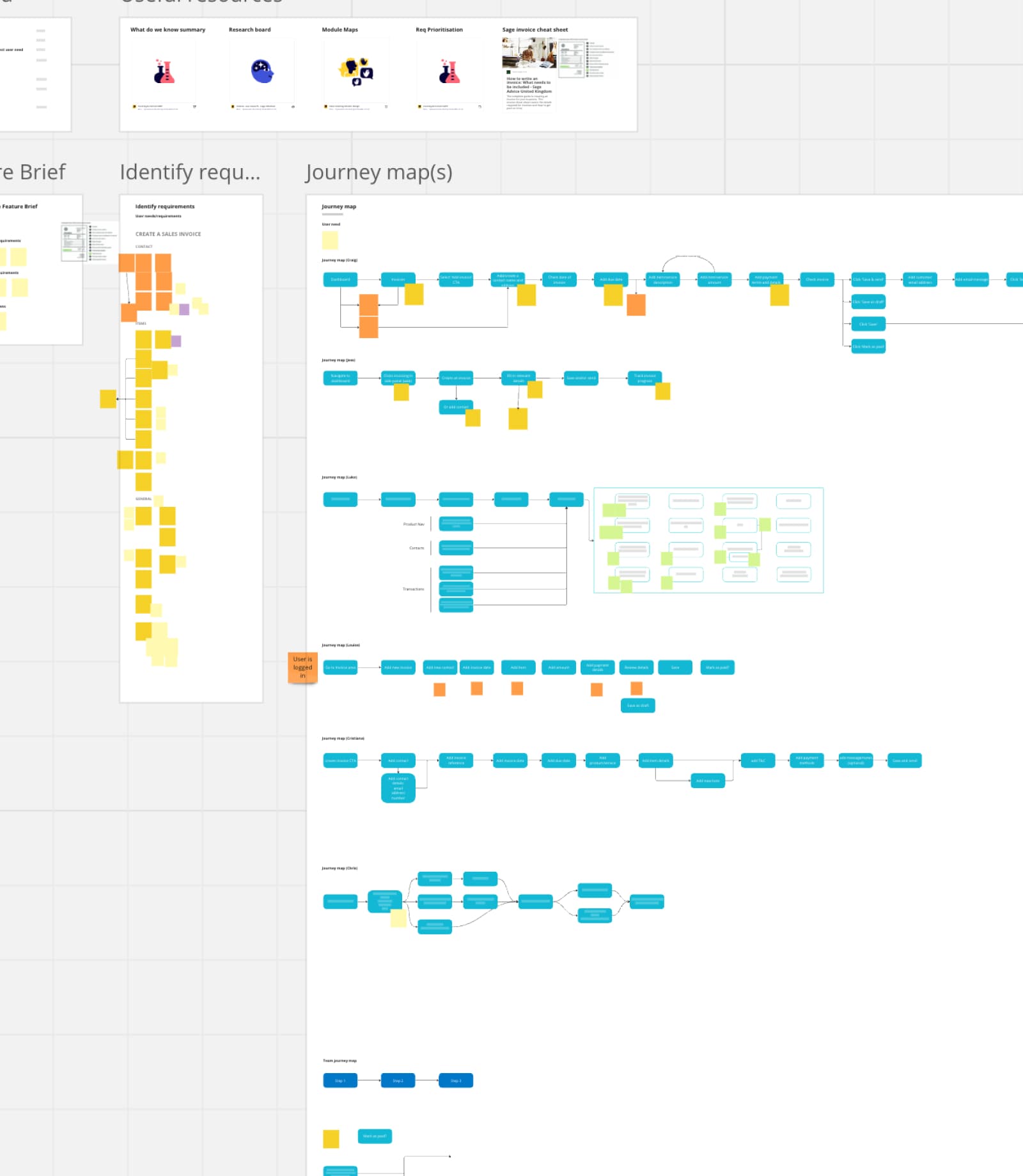
Working with the wider product team, we mapped out the end-to-end user journey for splitting transactions. This helped us understand all the touchpoints, edge cases, and opportunities to guide users through the experience.
Wireframes & prototyping
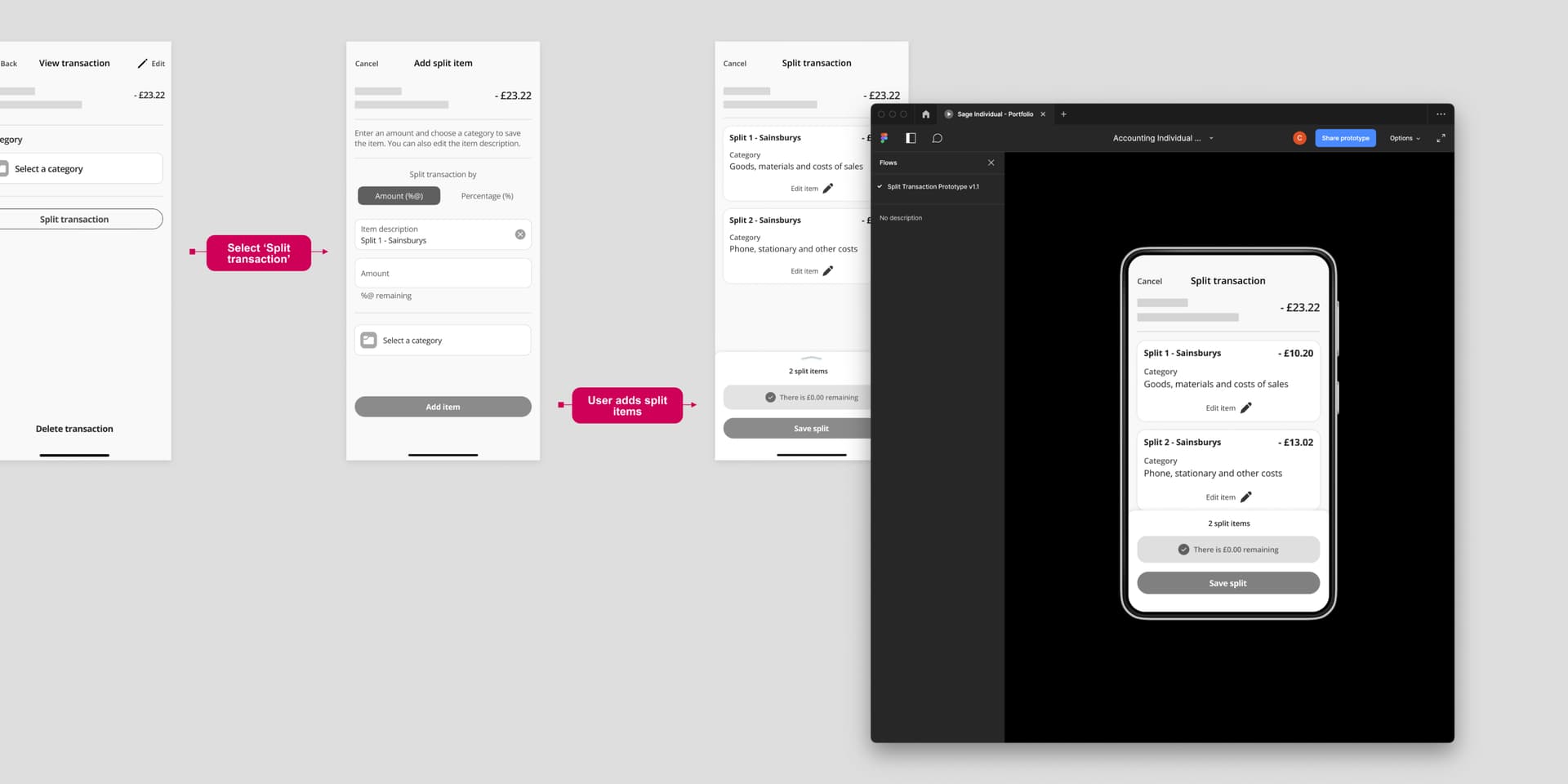
I created low- and mid-fidelity wireframes to explore different UI patterns for splitting transactions. These wireframes helped us quickly iterate on the interaction model and information architecture before committing to high-fidelity designs.
User testing
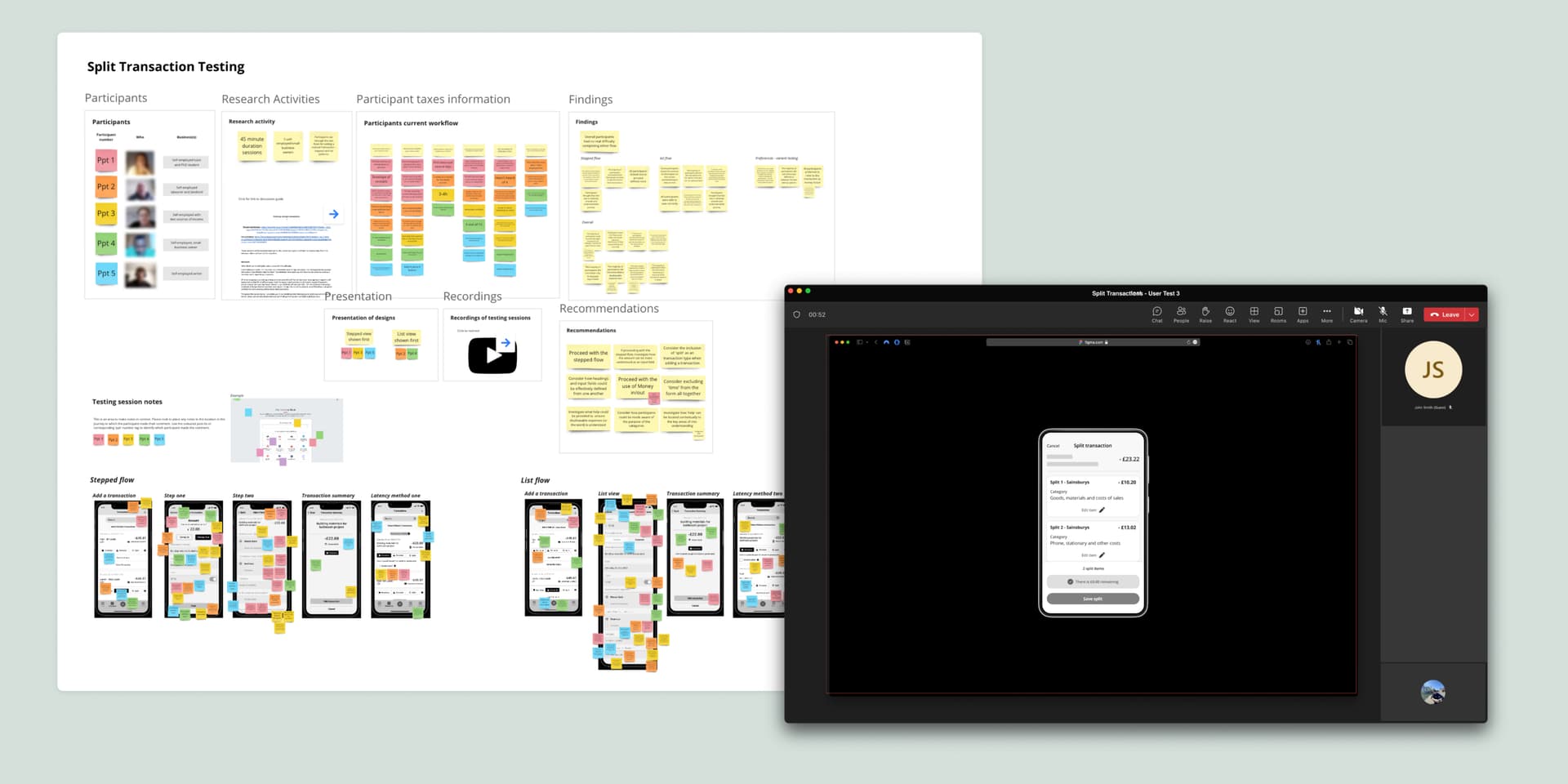
I ran moderated usability tests with sole traders to validate the design direction. Testing revealed key insights that shaped the final design, including simplifying the split interface and providing clearer feedback after splitting.
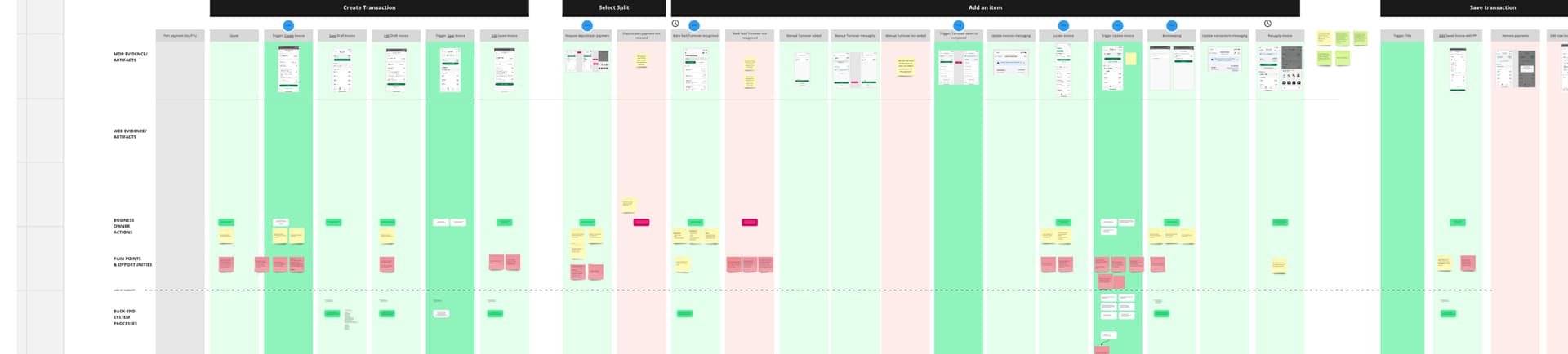
Service blueprint
To ensure seamless delivery, I created a service blueprint mapping the frontstage user experience to backstage technical requirements and processes. This helped engineering understand the full scope and identify technical dependencies.
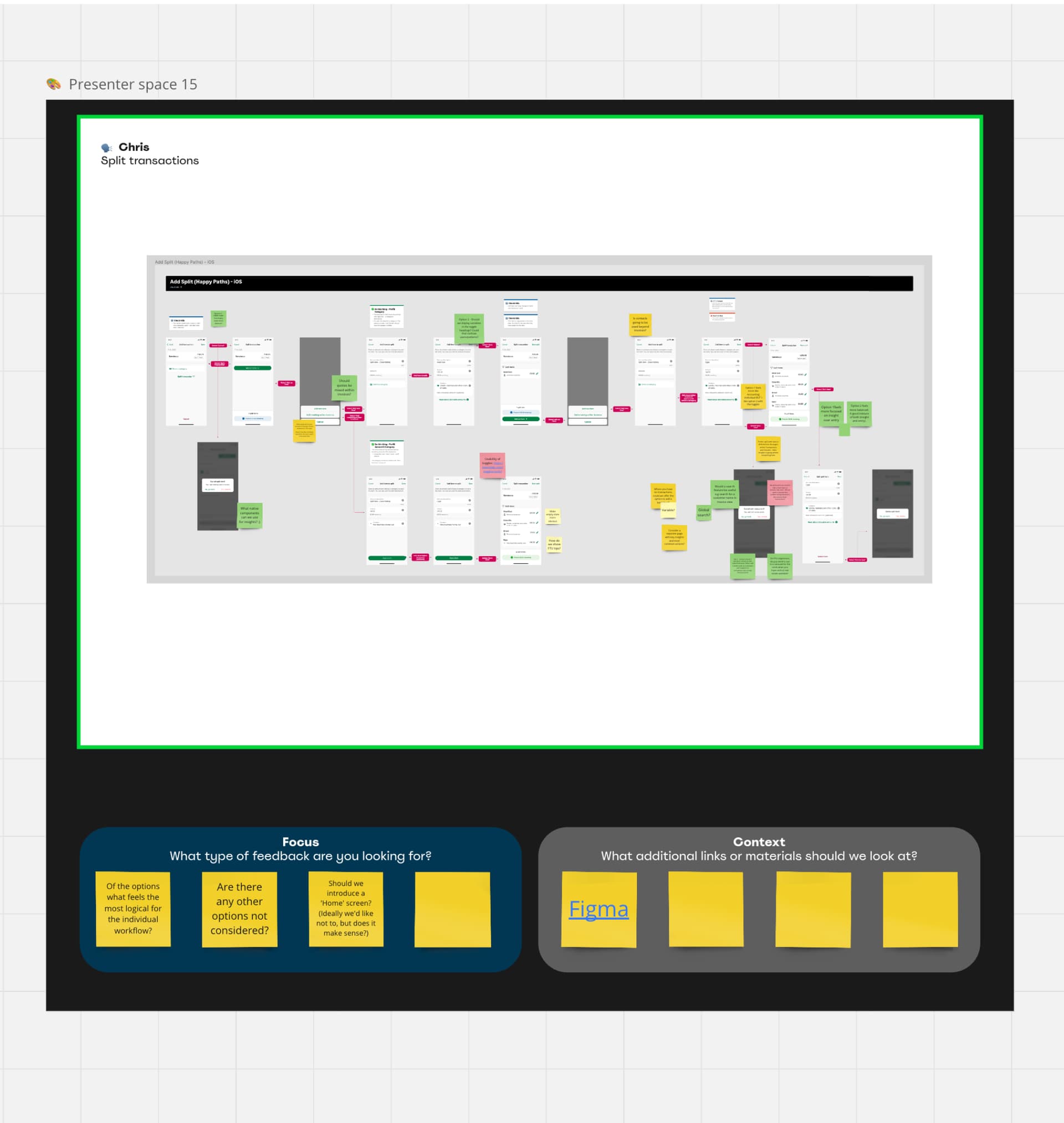
Designer and developer feedback
Throughout the design process, I collected regular feedback from other designers and engineers. This collaborative approach helped refine the design, ensure technical feasibility, and maintain consistency with our design system.
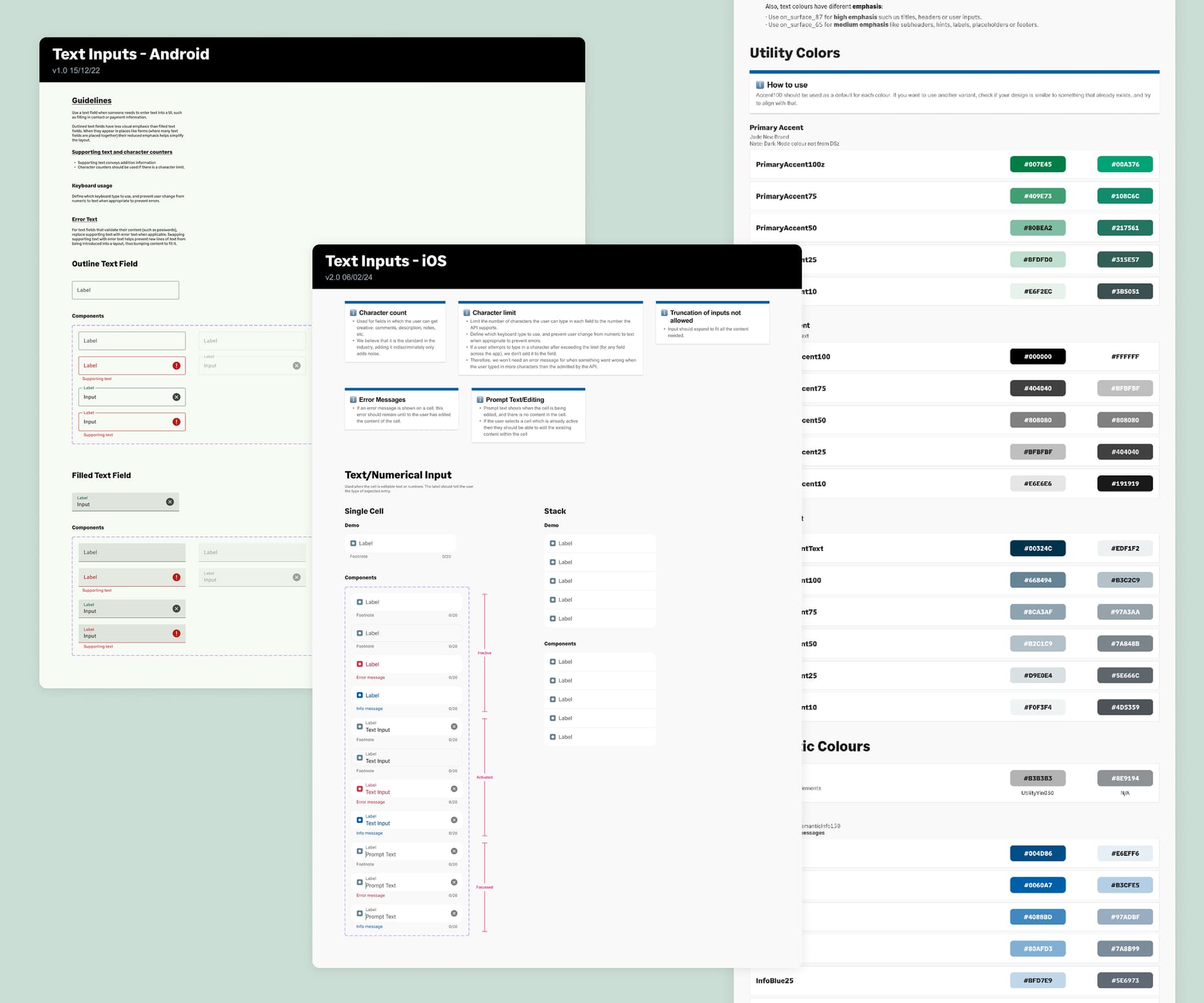
Design system
All designs were created using Sage's design system components and patterns, ensuring consistency with the rest of the product. Where new patterns were needed, I worked with the design system team to create reusable components.
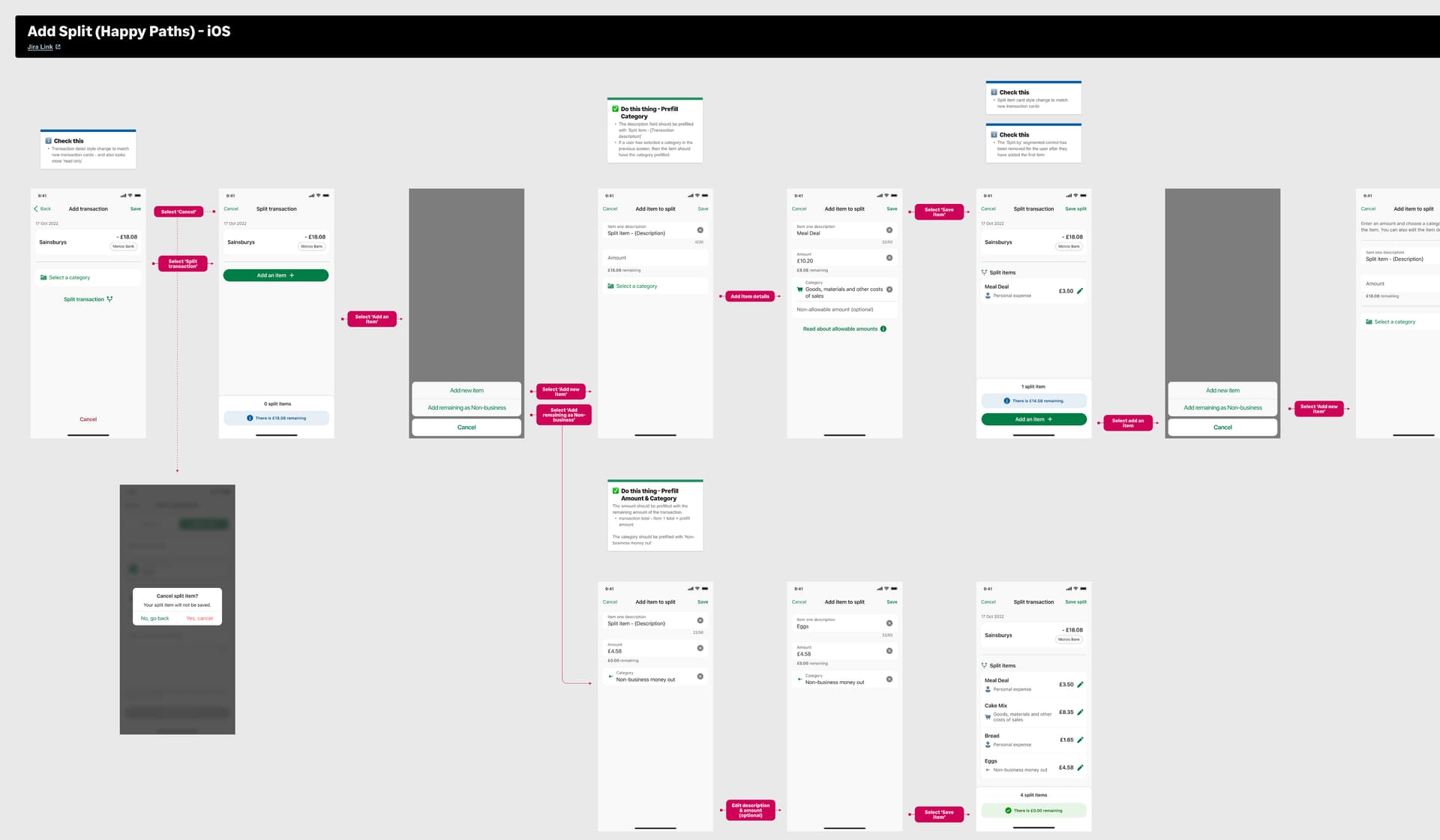
UI
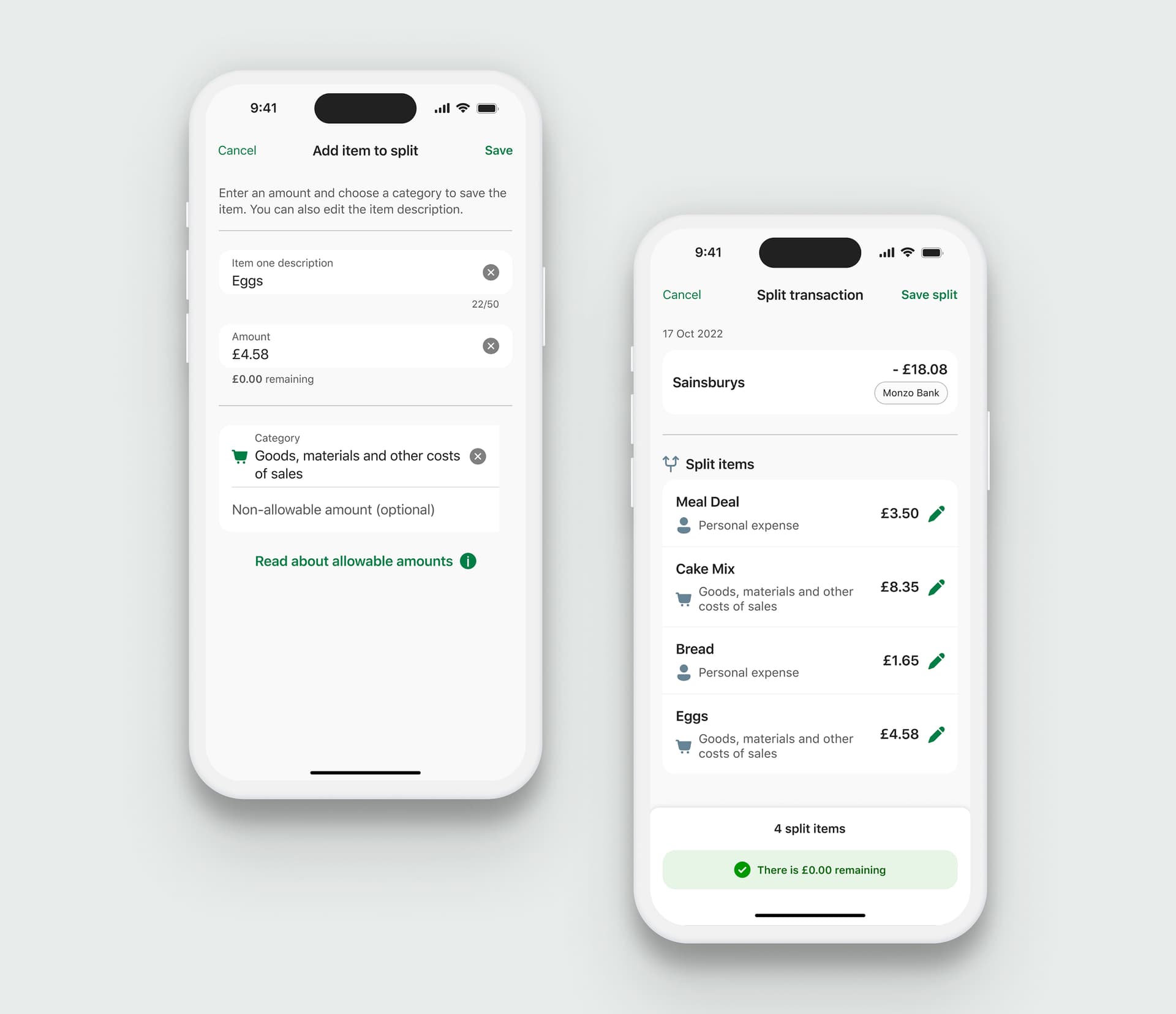
I created the pixel-perfect user interface in Figma in collaboration with Content Design, with frequent developer reviews and refinements to validate feasibility.
Build
Developer support
During development, I provided ongoing support to engineers, answering questions, clarifying edge cases, and making small design adjustments as technical constraints emerged. This collaborative approach ensured high-quality implementation.
UI/UX
I conducted thorough UI/UX reviews throughout development, ensuring the implementation matched the designs and met our quality standards. This iterative review process caught issues early and resulted in a polished final product.
Next steps
Iterations
Following launch, we will monitor usage analytics and gather user feedback to identify opportunities for iteration. Planned improvements include smarter default split suggestions and bulk splitting capabilities.
Next phase
Transaction splitting creates the foundation for more advanced features including tax estimates, expense categorisation, and financial reporting. We're exploring these opportunities as part of the product roadmap.